TTL » Etusivu » In English » Finnish Peat Industry in a Nutshell

FINNISH PEAT INDUSTRY CREATES WELFARE AND RESPECTS ENVIRONMENTAL ASPECTS

Click here for a brochure Finnish Peat Industry in a Nutshell

Here you can find an introduction to Finnish peat resources, to their utilization and to current environmental issues related to peat. Peat is an important natural resource for Finland. It creates employment and improves energy security - Finland would otherwise be 70 % dependent on imported fossil fuels. It is also shown that peat production does not threaten Finnish peat reserves.

Peat is an important natural resource in Finland

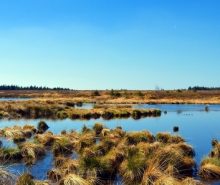
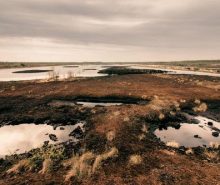
Finland is literally a “peatland” where almost 1/3 of the land area or approximately 9.3 million ha are covered by peatlands. About 51% of the Finnish peatlands have been drained for forestry and 4% for agricultural purposes, 32% are in pristine/natural state, 12% protected,  and 0.6% 60000 ha are used for peat production.

The use of peat as fuel and as a material for many other purposes has a long tradition in Finland. Nowadays, the production, processing and utilization of peat products provide full-time employment for 7200 people in Finland. At the moment, there are eight  large and middle-sized peat producing companies, about 250 small-size family businesses and hundreds of private contractors and entrepreneurs in peat harvesting and logistics. The value of the Finnish peat industry is more than 200 million euros.

Many possibilities to utilize peat

Peat is a very important heating fuel in Finland. Peat industry supplies energy peat (milled and sod peat, peat brickets and peat pellets) to hundreds of power and heating plants and centrals in different parts of the country. 17-20 % of the district heat and CHP-energy is produced with peat. About one million Finns live in areas where district heat is generated by combined peat and wood combustion.

Peat is also widely used in horticulture as a growing medium. Peat products are also suitable for many other purposes: as litter or absorbent peat, composting peat, frost insulation, landfill structures and soil improvement. Peat is also valuable for balneological and medical purposes.

Environmental  matters are a key issue to the peat industry in Finland

Sustainable and careful management of environmental matters are essential values in the Finnish peat industry. Environmental impacts of the activities are recognized and continuous research and development is being carried out to improve the operations and to minimize the environmental load.

Peat production in Finland is operated under strict environmental licenses issued by the environmental authorities. There are several efficient water treatment methods, for instance, that are selected on a case-by-case basis. Sedimentation ponds and pipe barriers placed in the field ditches belong to the basic treatment. Advanced methods, such as overland flow vegetation fields, through-soil infiltration, control of run-off peaks, chemical treatment and subsurface drainage are being used. Concerns related to noise and dust are also taken care of.

New environmental protection methods are continuously being researched and developed together with environmental authorities and consultants, universities and other research institutions. The Finnish peat industry is also committed to develop alternatives to the after-use or re-use of the cut-away peat production areas. There are several good examples of afforestation, reed canary grass cultivation, agricultural use, re-paludification and bird sanctuaries on the former production sites.

Life-cycle approach takes into account the whole chain

Climate change issues related to the utilization of peat have been a subject of public debate over the past few years. Having a life-cycle approach, i.e. analyzing the whole chain of peat production and after-treatment, is also essential from the climate-change point of view. According to the recent VTT research reports, cultivated (croplands) and drained peatlands have significant greenhouse impacts due to the increased oxygenation of peat leading to higher CO2 emissions. Directing peat production to these areas connected with biofuel production, such as wood or reed canary grass, in the after-use, would make the total climate impact of peat utilization significantly smaller compared to coal.


FNS